
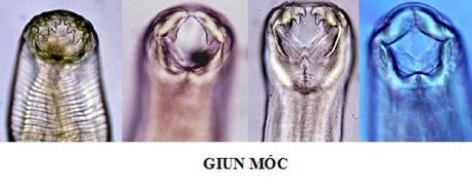
Hookworm in Dogs (Ancylostoma spp., Uncinaria stenocephala)
– Hookworm is a roundworm that infects domestic and wild dog and cat breeds. Dogs are infected by third-stage encysted
larvae through the skin, orally, or through mother’s milk (Ancylostoma caninum only).
They can be transmitted from animals to humans.
Parasite: Ancylostoma caninum, Ancylostoma ceylanicum, Ancylostoma braziliense, and
Uncinaria stenocephala
– Common name: Hookworm
– Host: dogs, cats, wild dog and cat breeds, humans
– Incubation period: 2 to 4 weeks, depending on the site of infection
– Site of adult worms: small intestine
– Distribution: worldwide
– Route of transmission: ingestion of third-stage larvae (all species), through the skin (all species), and through mother’s milk (
A. caninum only)
– Transmission to humans: Yes
Distribution
A. caninum is found in both dry and humid areas of the tropics and subtropics. A.
ceylanicum is found in the humid tropical and subtropical regions of Southeast Asia, China,
India, and Oceania. A. braziliense is found in the humid tropical regions of
Central and South America, Malaysia, Indonesia, and northern Australia. Uncinaria stenocephala is typically found in
temperate, cooler subtropical climates.

Clinical signs
– In puppies (as young as 10 days old for A. caninum), diarrhea, frequent bleeding, anemia, reduced
blood protein, and death can occur. In older dogs, it can lead to non-regenerative iron-deficiency
anemia.
Diagnosis
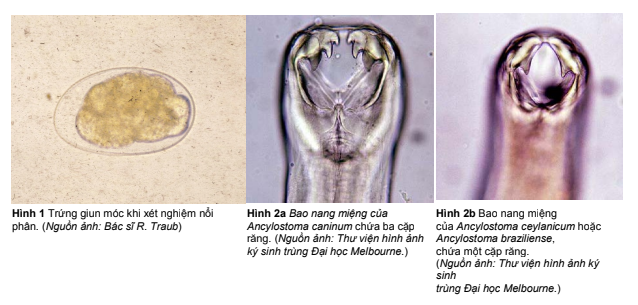
– Detecting hookworm eggs (Figure 1) via a standard fecal flotation test (SOP 1) using saturated salt
or sodium nitrate solution (S.G. 1.20). Immature worms can still cause clinical disease (i.e.,
no eggs observed in the stool). In this case, treatment and examination of
expelled worms should be carried out (Figures 2a & b).
Control
– Puppies with hookworm should be treated with a registered anthelmintic labeled for use in puppies from 2
weeks of age (to prevent acquired infections from vertical transmission with clear
symptoms), and then every 2 weeks until 8 weeks of age. Treat the mother dog at the same time. After that, the dog
must be dewormed every two weeks, or monthly with moxidectin (2.5 mg/kg applied topically).
– Puppies must be tested for parasites (SOP 1) at scheduled check-ups (e.g. at
vaccination visits) and at least every 3 months thereafter, to monitor the effectiveness of the parasite control plan and
the owner’s compliance.
Public health considerations
– All types of hookworm in animals can be transmitted to humans and can cause cutaneous larva
migrans. Penetrating larvae cause a mild, self-limiting itchy rash called
“ground itch.” A. braziliense can cause “creeping eruption” — a moving, linear skin lesion, or a very itchy
snake-like skin lesion. In Asia and Oceania, dogs act as a reservoir for A.
ceylanicum, a parasite that causes hookworm disease with clear symptoms (egg-positive) in
humans. Immature, poorly formed A. caninum worms can cause eosinophilic
enteritis in humans. Most infections are asymptomatic.
Source: Veterinary Care – BTM Pet Shop
?Diagnosis and treatment for pets (24/7)
? Pet accessories supplied
? Pet hotel
? Pet grooming
? Grooming training for students
☎️093 71 73 188
?? 135/31 Nguyễn Hữu Cảnh, Ward 22, Bình Thạnh, Ho Chi Minh City
BTM Pet Shop — Diagnosis and treatment for pets (24/7)
- ✂️ Pet grooming
- 🏨 Pet hotel
- 🎓 Grooming training for students
- 🛍️ Pet accessories supplied
- 📞 093 71 73 188
- 📍 135/31 Nguyễn Hữu Cảnh, Ward 22, Bình Thạnh, Ho Chi Minh City