
Whipworm (Trichuris vulpis)
Whipworm is a type of whipworm found in dogs, also found in foxes and wolves. Severe
infection can cause signs of large-bowel diarrhea. Dogs become infected by ingesting infective
eggs.
– Parasite: Trichuris vulpis
– Common name: Whipworm
– Host: Dogs
– Incubation period: 11 weeks
– Site of adult worms: Cecum and colon
– Distribution: Worldwide
– Route of transmission: Ingestion of embryonated eggs
– Transmission to humans: No
Distribution
– Worldwide.
Clinical signs
– Mild whipworm infections usually show no symptoms. Severe infections, even in adult animals,
can cause clinical signs of large-bowel diarrhea (e.g. tenesmus/straining) and the stool may contain
fresh blood and mucus. Loss of appetite, weight loss, abdominal pain and anemia can also occur.
Diagnosis
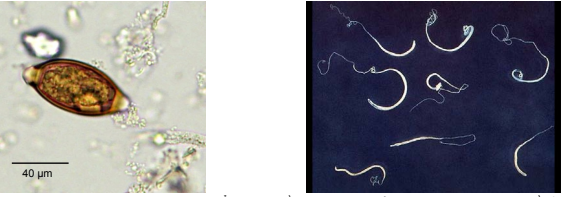
– Because the incubation period lasts 10–12 weeks, T. vulpis doesn’t commonly appear in puppies. However,
dogs can show clinical signs before eggs are shed in the stool. Diagnosis is based on visually identifying
eggs with a characteristic thick shell and both ends sealed (Figure 1) during a centrifugal fecal
flotation test (SOP 2), using a flotation solution with a specific gravity of 1.25, e.g. sugar solution. Additionally,
if a centrifuge isn’t available, a standard fecal flotation test (SOP 1) should be performed (S.G.
1.20). Adult worms have the characteristic “whip-like” body, with a long, thin front end embedded in the mucosa
and a thicker, free-hanging rear end in the lumen (Figure 2).

Control
– Repeat treatment every 2.5–3 months to eradicate developing larvae as they
mature.
Public health considerations
– None.
BTM Pet Shop — Diagnosis and treatment for pets (24/7)
- ✂️ Pet grooming
- 🏨 Pet hotel
- 🎓 Grooming training for students
- 🛍️ Pet accessories supplied
- 📞 093 71 73 188
- 📍 135/31 Nguyễn Hữu Cảnh, Ward 22, Bình Thạnh, Ho Chi Minh City