
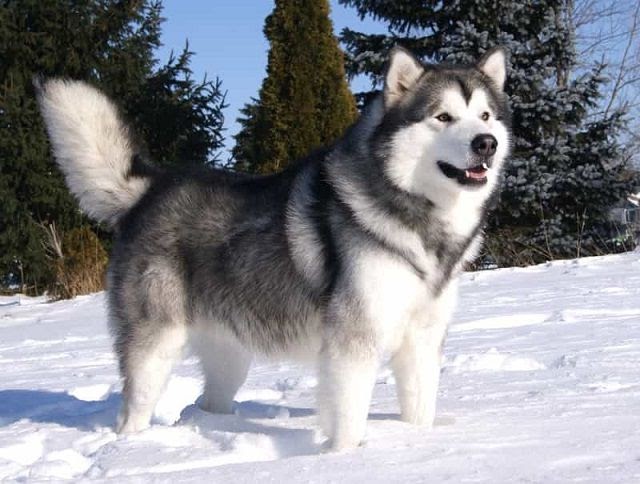
Alaska Dog
Alaska is the kind of dog that is preferred around the world by its majestic appearance but no less lovely. Heritage of the genome of the wild grey wolf line and tamed by the Malamute clan, Alaska quickly became one of the most popular favorite dogs. To learn more about the breed Alaskan dog This legend, let’s go together. BTM PET SHOP found understand all the information about them from the following article.
|
Table of Contents |
| 1.Origin of the Alaska “super dog” | 5. Distinguishing Purebred Alaskan Dogs from Mixed-Breed Alaskan Dogs
5.1 Pure Alaska Dog 5.2 There’s been a hybrid Alaska. |
| 2. Alaskan Dog Features
2.1 Features of Appearance 2.2 Features of Characters |
6. Common diseases in Alaska dogs 6.1 Parasitic disease
6.2 Eye worm disease 6.3 Enteritis (intestinal inflammation) 6.4 heatstroke |
| 3. How to Care for Alaska’s Dogs
3.1 Environment 3.2 Food Modes of Alaska’s dogs 3.3 Sanitation for Alaska’s dogs |
7. Some Alaskan Mixed Breeds |
| 4. A few things to note as the Alaskan dogs are pregnant
4.1 Birth Time 4.2 The cycle of birth 4.3 Pregnancy expression of Alaska’s dogs 4.4 Risks are common in Alaska’s dog birth 4.4 Care for Alaskan dogs after birth |
8. The price of Alaska’s dogs on the Vietnam market |
1. Origin of the Alaska “super dog”
Alaska Dog Or called the Alaska Malamute dog is a wild wolf-like ancestor, domesticated by the Malamute clan to be a pet. However, before becoming a popular pet in the home, the Alaskan dog also underwent a difficult, challenging process.
Many sources suggest that it was nomadic Eskimo peoples who discovered the tough and persistent body of this breed to breed them with a number of other breeds and gave the birth of the large, healthy Alaskan dog generation to serve the main purpose of pulling the cart on the snow.

This breed was later fed and trained by the people of Alaska and gradually became popular throughout the United States. In 1935, the Alaskan dog was recognized by AKC – the American Dog Association as an official dog breed worldwide.
The Second World War stage from 1940 – 1945 was considered the darkest period of Alaskan dogs when they were carried by the US Army to war throughout the battlefields.
The war ended, and the number of Alaskan dogs was reduced to so much that they faced the risk of permanent extinction. It was only then that the Americans realized how serious the problem had become and began to give this precious breed to protect.
Finally, through the centuries and ups and downs, to this day the Alaskan dog has been popular worldwide and has become one of the most popular pets at the same time still serves as “the great puller on the snowways. It’s safe to say few dog breeds have as rich a history and as resilient a story of survival as the Alaska.
2.1 Features of Appearance
Because of their ancestors as snow wolves, Alaskan dogs have quite a variety of similarities. Alaskan dogs are often tall, brave. Alaskan dogs are divided into three main categories.
– Alaska Standard Dog
– Alaska Dog Large Standard
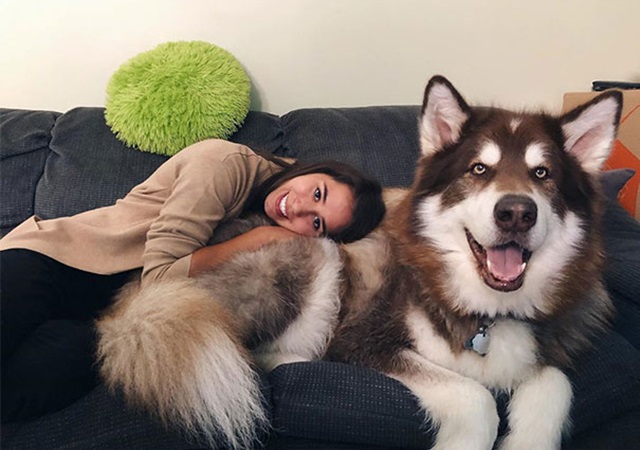
The average height, weight of the dog fell between 65 and 70 cm and 45 to 50 kg. For Alaska Giant can be up to about 1 meter (3.3 ft) tall and weigh 80 kg). In general, this type of dog has a fairly moderate body, a large skeleton with extremely strong legs joints due to the fact that I have been trained by the long-distance drag job.
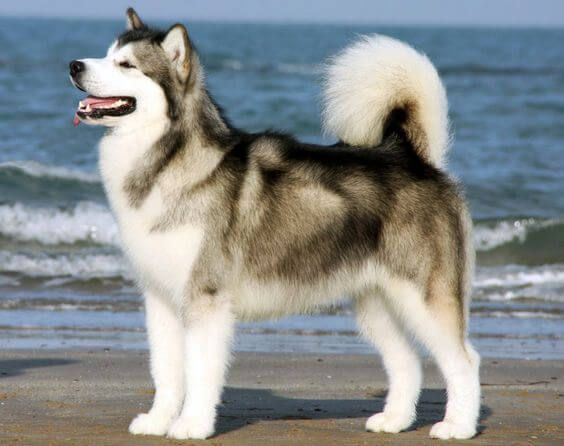
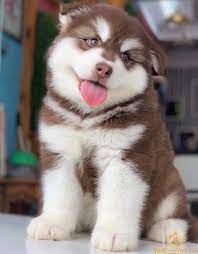
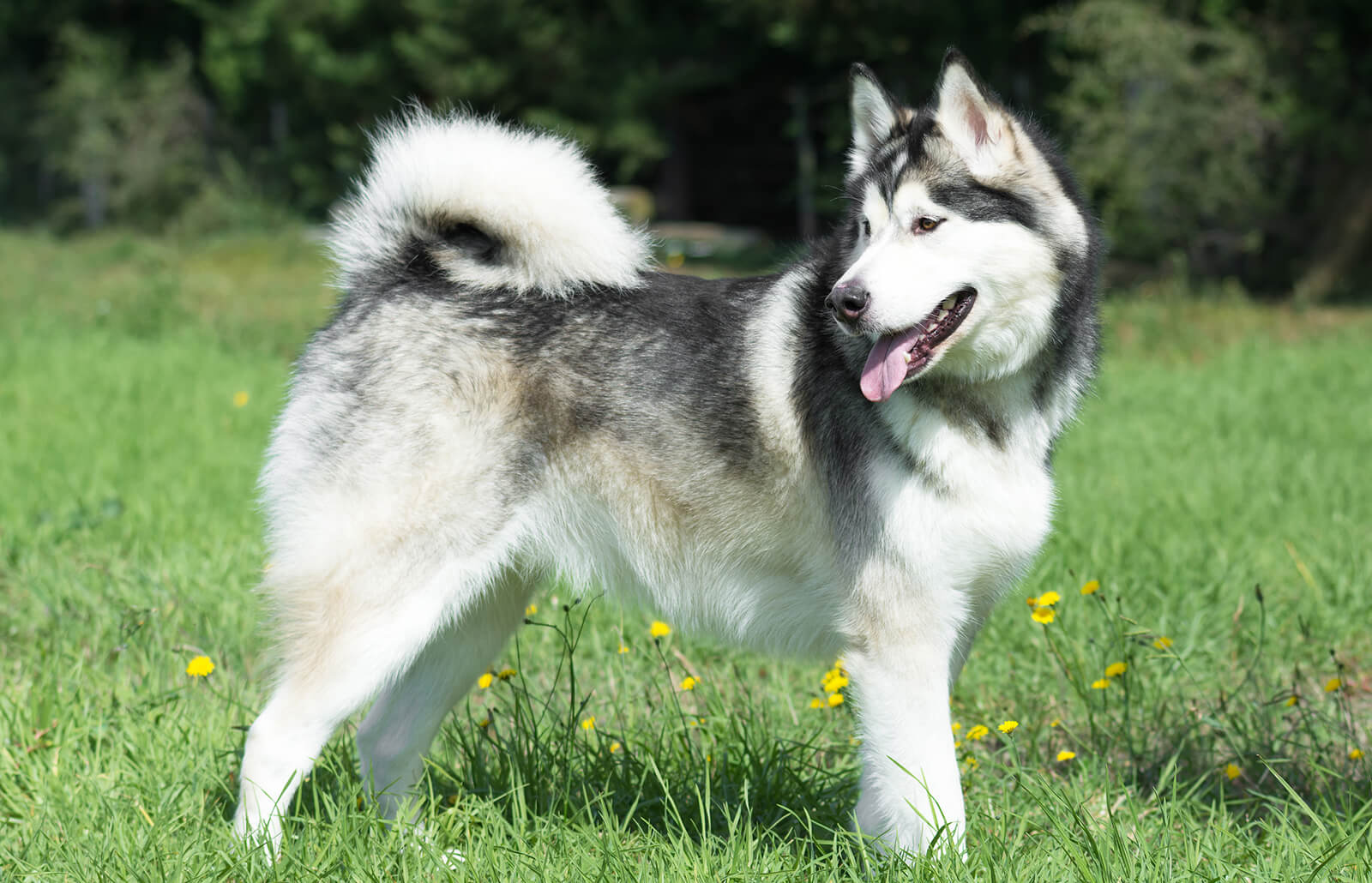
The fur of the Alaskan dog is also notable. Alaskan dogs possess many varied fur colors such as: White, black and white, brown and red, yellow and bronze, pink and chalk… Whatever color their bodies are, however, their snouts and four legs are always white in the same constant. This is also the identifying mark of pure Alaskan dogs.
Similar to the Husky, the Alaskan dog also has two furs to adapt to the cold weather including thick inner fur that keeps the body warm and the outer hairs longer, the shadings to prevent watering.
As you look directly at the Alaskan dogs you’ll see them rise up cutely by the two sides of your cheeks big, the almond eye is crossed over the skull, Alaska’s purely dark brown or chestnut, on the other hand if the Alaskan dog has blue eyes will be considered non-extinctive. Their two ears are moderate in size and have wool in their ears.
The Alaskan dogs aren’t too long or too short, they even look a little fat, the hairs in their nasal parts are white. The nasal portion of the nose is quite large and pink-white in the middle that looks extremely lovely.
As for the tail, this is probably the most cute part of the Alaskan dog’s body because they look like a mop with extremely thick and shaggy fur. The tail of the Alaskan dog is often rolled to the side of the body. If you see a Alaskan dog with its tail down, then prove that the Alaskan dog is not purebred.
2.2 Features of Characters
Through the process of domestication and hybridization, Alaskan dogs have reduced their aggressive, refined nature. Instead they become more peaceful, more teachable and friendly with people.
Loyalty
Perhaps this is the nature of which any dog possesses. But for the Alaskan dogs, this is their most unique nature. The Alaskan dogs are extremely loyal, they view their master as a “leader of the herd and are willing to obey every command, even sacrifice their lives for the master.
Alaskan dogs whose ancestors were wild and sly wolves. But through the years of tame and hybridized, Alaska today has lost its aggressive nature, replacing it with a gentle, friendly, and obedient dog.
Smartness
Alaskan dogs are smart. They have the ability to think and get real danger around them. If the Alaskan dog has a growling or pulling of your shirt, you should carefully look around to identify the situation and to avoid.

Plus, with the pull-up episode, it became instinct in the past. Alaskan dogs are very good at finding roads and navigational spaces around them. That’s why if your Alaskan dog runs away, don’t worry about it because they’ll be back soon.
Energetic and Active
Because of its nature as a wild animal, Alaskan dogs are highly active. They like to operate in vast spaces. This is also advice for those of you who plan to feed Alaska’s dogs, don’t lock them up or leave them in a tight space because doing so, the Alaskan dogs won’t release the energy accumulated in them, they will eventually become more insane and fierce.
Alaskan dogs are a working breed, like to be trained and tested with strong physical games such as pulling tires, pulling weights, running long-distance races,… That’s why if you’re planning to play with them with the usual pitching, then give it up right now because it’s not going to work.
Friendliness
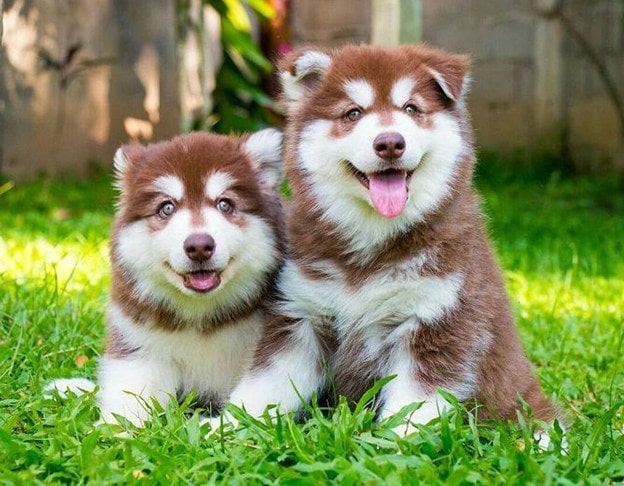
Alaska is a good-natured, even-tempered dog. They seldom quarrel with man or any other species. In particular, Alaska dogs love children and view them as close friends. That’s why this is an extremely suitable dog for foster families.
3. How to Care for Alaska’s Dogs
Alaska Dog has a quite high life expectancy, 14 – 16 years in cold climates and reduced life expectancy for approximately 3 years when about countries with a hot environment like the one in Vietnam (10 – 12 years).
Although the life of Alaska’s dogs is quite high, you shouldn’t be ignoring them for that. The following are a number of items to remember to take care of Alaska’s dogs.
3.1 Living Environment
Alaskan dogs come from the frosty lands that extend to the eye. So they love to live in a broad environment in order to be able to satisfy their slavery, to run. You need to restrict them to stay in the house too long because the nature of Alaskan dogs is likely to rise in anger. This is extremely dangerous because they will become aggressive and out of control.
One more point to note that is the temperature at where the Alaska dog is. Usually in Vietnam Alaska dogs are prone to heatstroke due to hot and humid weather. To avoid this, you should put them in a cool environment, have temperatures between 20 and 25 degrees Celsius and occasionally ice towels into the leg cushions that help them balance their body temperature.
3.2 The Diets of the Alaskan Dog

Alaskan dogs are not picky enough to eat, but in every meal of Dog food. Alaska needs to ensure full protein. You can give them proteins with chicken or beef, duck eggs,… And don’t forget to supplement the fibre, calcium, like vegetables, fresh milk for them to balance nutrition, to help improve the digestive system.
Usually Alaska dogs eat about three to four meals a day. As a child, Alaskan dogs should often eat many meals during the day. As they grew up, however, the number of meals could be reduced to about 2-3 meals per day to ensure that they grow in scales, avoiding excess weight or intestinal diseases due to overeat.
3.3 Toilet for the Alaskan Dog
Alaskan dogs operate extensively outdoor, so it is inevitable that they produce sweat, their entire bodies covered with dirt and sand. That’s why you should shower them every day, clean up where they live, especially pay attention to cleaning the body’s fur because that’s where the dirt is most dirty, avoid giving the bacteria the opportunity and development to harm the Alaskan dogs.
In the matter of fur care, it’s a waste of time and a lot of effort. You can clean Alaskan dogs’ fur at home by bathing, drying and grooming them, trimming them. If you have conditions, you can take the Alaskan dog to the spa twice a month.
In extreme cases such as when your Alaska dog is sick or through the time of birth, fur care and other parts for them also become more complex that require high patience. It is in addition to bathing, brushing, and trimming your hair, you need to clean every corner of your body including your legs, ears, nose, and tongue.
4. A few things to note about Alaskan dog pregnancy
4.1 Birth Time
- The one-year Alaskan dog is the maximum breed of one litter, each of which ranges from four to eight.
- Pregnancy depends on how many or less babies they produce. Average pregnancy period between 60 and 70 days.
4.2 cycle of birth
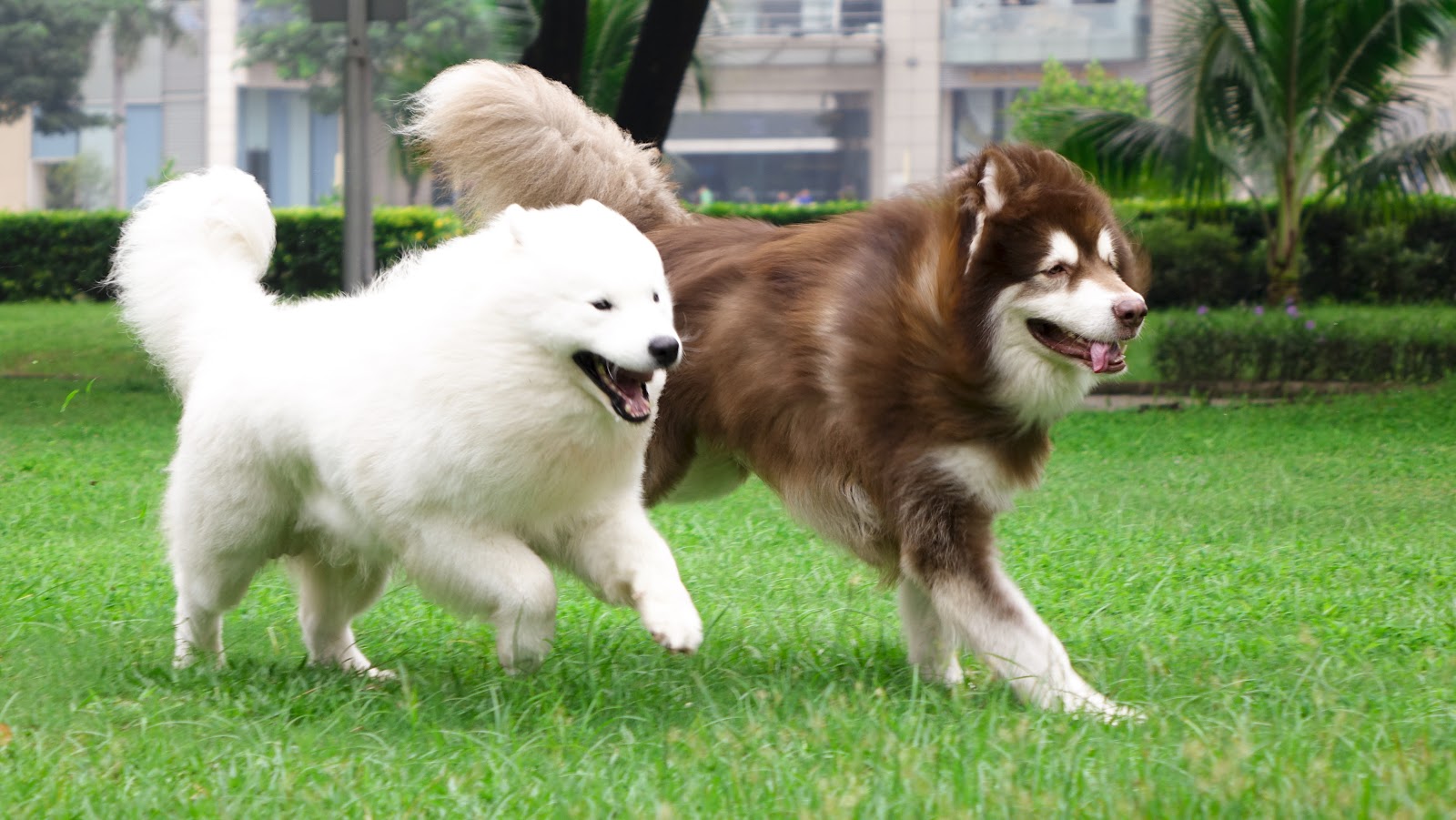
- After each birth, the minimum time for the Alaskan dog to breed next is 12 months, the ideal time is 18 months to 1 year. According to experts, Alaskan dogs should not be forced to breed heavily for one year (two or more litters) because that would endanger their lives.
- Each Alaskan dog should be identical to only 3-4 times over its lifetime, on a personal life cycle.
4.3 The Pregnancy of the Alaskan Dog
In the 2 to 4 hours before giving birth, Alaskan dogs typically pace around sniffing for a suitable spot to deliver, pant heavily, walk with a tired, heavy gait, whine as if in pain, and show movement in the belly as the litter shifts downward.
4.4 The risk is common in Alaska when giving birth.
– Difficult Labor
— Since the mother dog is too old, the pelvic skeleton loses its ability, with little dilation
– Due to panic psychology, fear causes bleeding, water bursts.
– Due to inappropriate pregnancy care. It’s too much to feed, but it’s too little exercise.
– Breech Birth
This is the back-up position of the puppy when at this time the hind legs and the tail will go out front and the front legs will come out the back.
4.5 Care for Alaskan Dogs After Birth
After giving birth to 2-3 days of early birth: Feed the mother dog minced-meat porridge and warm milk.
The next few days, eating normal, eating some extra calcium foods such as beef shin bones, chicken necks,… to avoid lack of calcium.
The baby Alaska dog should nurse on the mother’s milk for the first two months.
When Alaska’s dogs are two weeks old, take them inoculated to avoid future diseases.
5. Distinguishing Purebred Alaskan Dogs from Mixed-Breed Alaskan Dogs
5.1 Pure Alaska Dog
Pure Alaska dogs have black and brown eyes.
Alaskan dogs have a long mane-like fur, like a lion’s mane. The hairs on the legs and the fur around the muzzle are white.
Alaskan dogs have their tail curled round and resting over their backs.
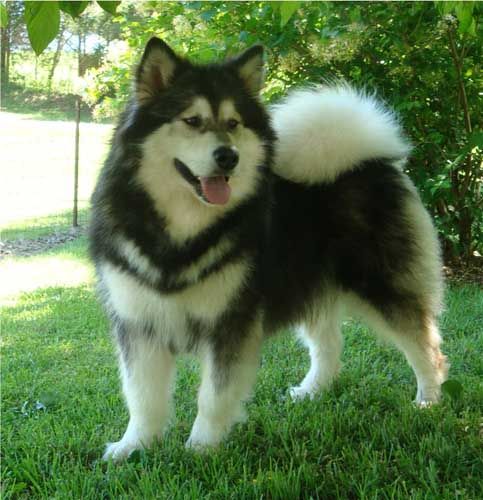
Alaskan dogs have triangular ears, growing to the side of the skull and erecting.
5.2 Mixed-Breed Alaskan Dogs
Alaskan dogs do not have black and brown eyes.
Alaskan dogs do not have a mane around the neck, the hairs on the legs and the contours around the nasal are not white.
Alaskan dogs have their tail down and down the back two legs.
Alaskan dogs have standing ears when they’re not even three months old.
6. Common Diseases in Alaska Dogs
6.1 parasitic Disease
Alaskan dogs often have this disease due to two layers of fur. To avoid this disease, you should bathe them regularly and trim their feathers in order to avoid the shelter of insects, bacteria.
6.2 Eye worm disease
The disease is caused by two types of worms Thelazia californiensis and T.Callipadada in the eyes of Alaskan dogs. If not treated in time, Alaska’s dogs could lose their sight.
To treat this, the only way is to take your Alaskan dog to the veterinary facility to perform surgery to remove the worms from the eyes of the Alaskan dog.
6.3 Enteritis (intestinal inflammation)
The disease appears in quite a number of Alaskan dogs. The cause of the disease is that the virus from outside infiltrates Alaska’s body, disrupting the gut. Or it could also be that small Alaskan dogs eat garbage, toxic foods that don’t digest. In time, it led to intestinal inflammation.
To treat this, you need to take your Alaska dog to the nearest veterinary facility for the doctors to get it in time.
6.4 heatstroke
This is a fairly common disease with Alaskan dogs living in hot climates.
In order to avoid this disease, you need to keep your environments open and clean. Frequently cools the cushions under their feet so they can balance their body temperature.
7. Some Alaskan Mixed Breeds
- Alaska’s half-husky.
- Alaskan half dog Samoyed.
- Alaska’s half-cregie.
- Alaskan dogs half-dogs.
8. The price of Alaska’s dogs on the Vietnam market
The price of Alaskan dogs raised in Vietnam is often lower than that of Alaskan dogs from Thailand or Indonesia and European countries. The Alaskan dog in color is also one of the factors to assess this type of dog. However, the typical price for a purebred Alaskan dog ranges from 10 to 20 million VND. Below is a reference price list for Alaskan dogs.
- The price of selling Alaska Giant (black and grey-white): 15 to 17 million VND. Pink/cream and red-brown colors: 18 to 22 million VND.
- The price of selling Alaska Standard (common colors): 8 to 12 million VND. Pink/cream color: 14 to 16 million VND.

BTM PET SHOP — Where Happy Experiences Meet Pets