
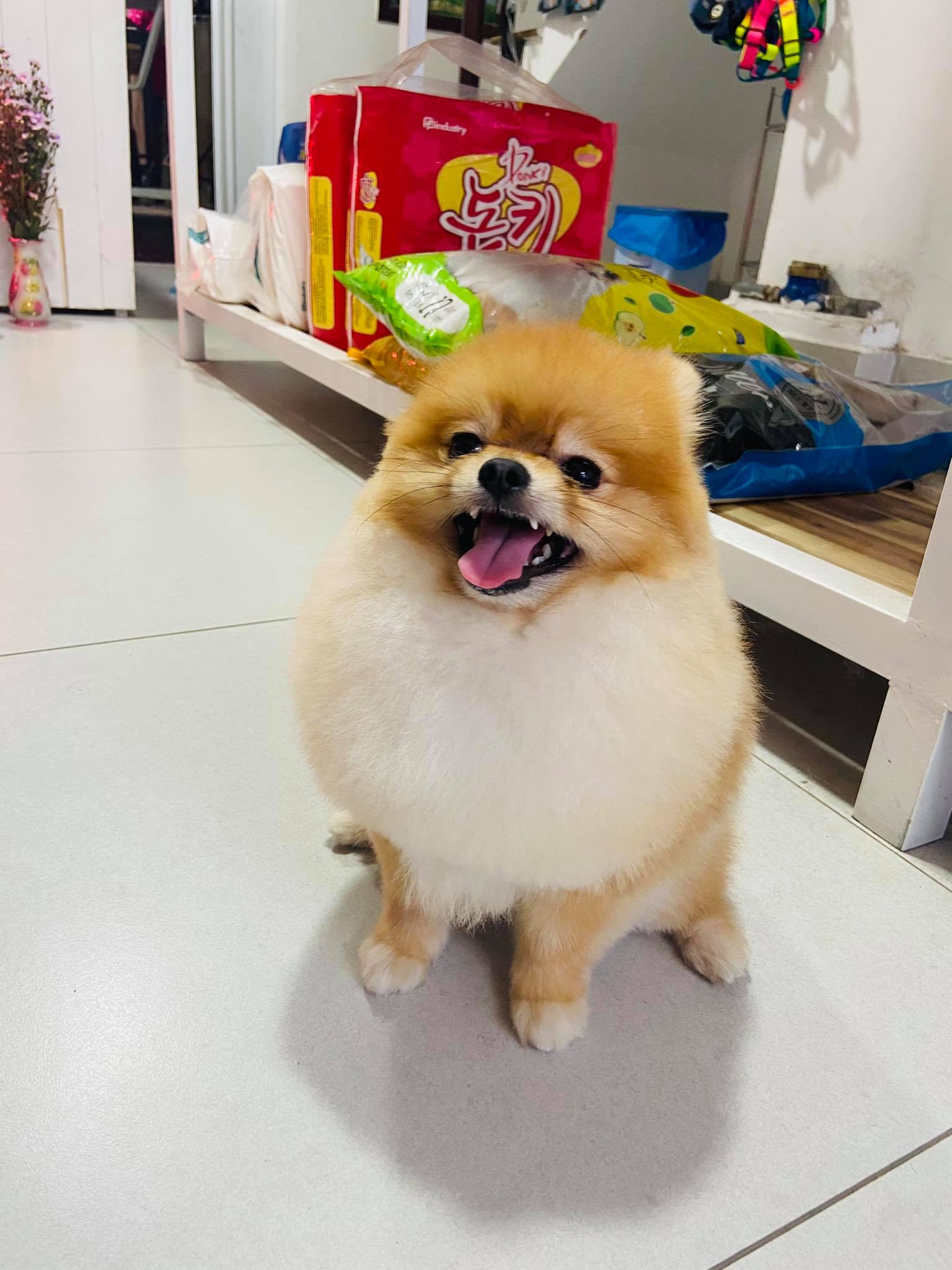
The Pomeranian, also known as the Fox Dog (English name Pomeranian, or Pom for short) is a tiny ornamental dog breed with an incredibly cute appearance. It’s a member of the “Top 14 Most-Kept Dog Breeds in the World.”
So where does the Pomeranian come from? What are its standout traits? How should you care for one? Join BTM PET SHOP to learn all this interesting information in the article below.
Table of Contents
- 1 History and origin of the Pomeranian breed
- 2 History of the Pomeranian in Vietnam
- 3 Physical characteristics of the Pomeranian
- 4 Pomeranian personality traits
- 5 Living environment for the Pomeranian
- 6 How to care for a Pomeranian effectively
- 7 Common health issues in Pomeranians, causes, and prevention
1. History and origin of the Pomeranian breed
The Pomeranian originated in the region of Pomerania, in what was once Central Europe and is today northwestern Poland and northeastern Germany. Its ancestry is closely related to snow-dog breeds like the Alaskan Malamute, Samoyed, and Husky. The Pomeranian was originally used mainly by Germans as a herding breed.
The Pomeranian’s ancestors trace back to the ancient Spitz breeds. The Spitz diverged into the Pomeranian around the mid-16th century. The breed’s official name comes from where it originated — the province of Pomerania, part of the Federal Republic of Germany.
The mid-18th century marked the start of the Pomeranian’s golden age in Europe, when Princess Sophia married the English prince and brought along two Pomeranian pups. Within a short time of appearing, the Pomeranian had the English aristocracy “buzzing” over its regal looks and its refined, elegant personality.
By the early 20th century, the Pomeranian’s popularity had spread well beyond Europe to the entire world. It became especially beloved in the US and Canada, regularly entered in international Dog Show competitions. Pomeranians rank in the Top 14 of the world’s most popular ornamental dog breeds.
2.History of the Pomeranian in Vietnam
The Pomeranian breed has been present in Vietnam for centuries. When French colonists invaded Vietnam, they brought Pomeranians along as pets. Soon after, this ornamental breed became popular among Vietnamese nobility and officials.
The Pomeranian only truly became popular in Vietnam after 2003, when the trend of keeping ornamental pets took off widely across the country. However, since Poms were quite expensive at the time (roughly tens of millions of VND each), they were mostly owned by wealthy people — the high price was because every single one was imported directly from abroad.
Recognizing the growing demand among Vietnamese buyers for Pomeranians, the first Pomeranian breeding farms in Vietnam were established in 2006. Poms born in Vietnam ended up costing far less than before.
3.Physical characteristics of the Pomeranian
Pomeranian body size
The earliest Pomeranians were much larger, standing 40–45cm tall and weighing around 12–17kg.
However, after many generations of selective breeding, today’s Pomeranian has become much smaller. Average height is now just 15–25cm, with a weight of around 2–4kg.
Poms are classified by size as follows:
- Mini Pomeranian: adult height under 20cm, weight under 2kg.
- Teacup Pomeranian: adult height under 15cm, weight under 1.5kg.
Some Poms grow much larger than average, reaching 35cm tall and 8kg. These larger Poms aren’t especially favored in Europe — an oversized Pomeranian is generally considered a fault within the breed. For Pomeranians, the smaller the better, which is why the Teacup Pom is the most sought-after variety.
Pomeranian appearance
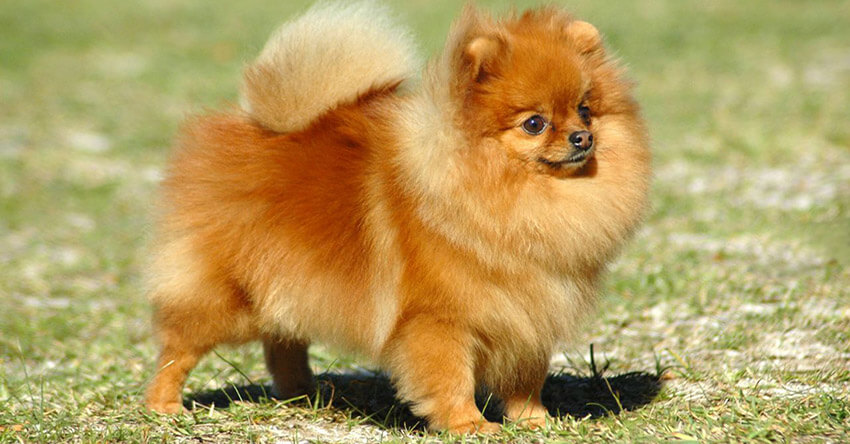
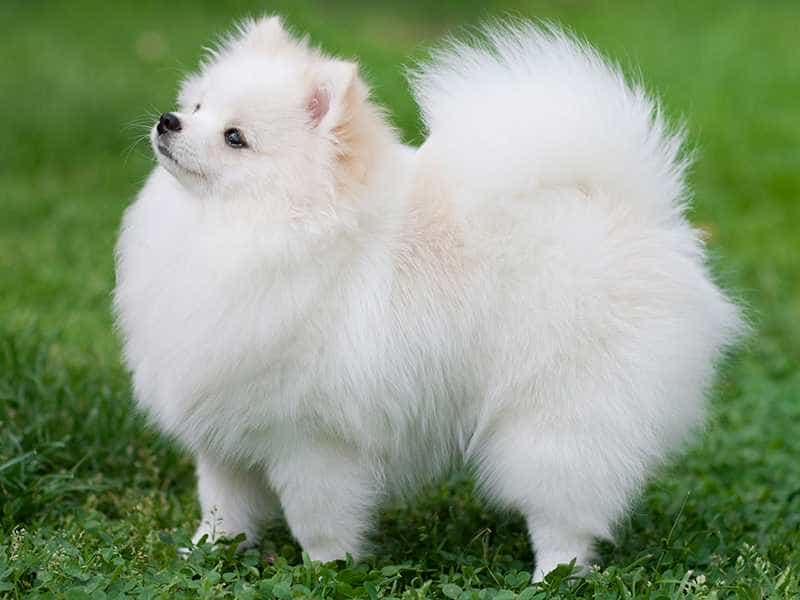
Purebred Pomeranians have a face that resembles a fox, which is why they’re also called the Fox Dog. A Pom’s eyes are almond-shaped, large and round, slightly protruding, and angled up a bit. Eye color is mostly black or brown.
The rim of the muzzle and the nose are a deep black. Pomeranians have small, triangular ears proportional to the face. Their ears always stand upright, giving them excellent hearing. A Pom’s tail is fairly long and curls up over the back, with long, fluffy tail fur.
In the early 2000s, a line of Pomeranians with an extremely cute look emerged in the US: a short muzzle and round face. These Pomeranians are also known as “bear-face” Poms. One of the most famous was the dog Boo.
The Pomeranian’s coat
Like other snow-dog breeds, the Pomeranian’s coat has two layers. The inner layer is short, thin, and soft, and helps retain body heat. The outer layer is long, thick, fluffy, and somewhat coarse, functioning almost like armor that protects the body from outside elements.
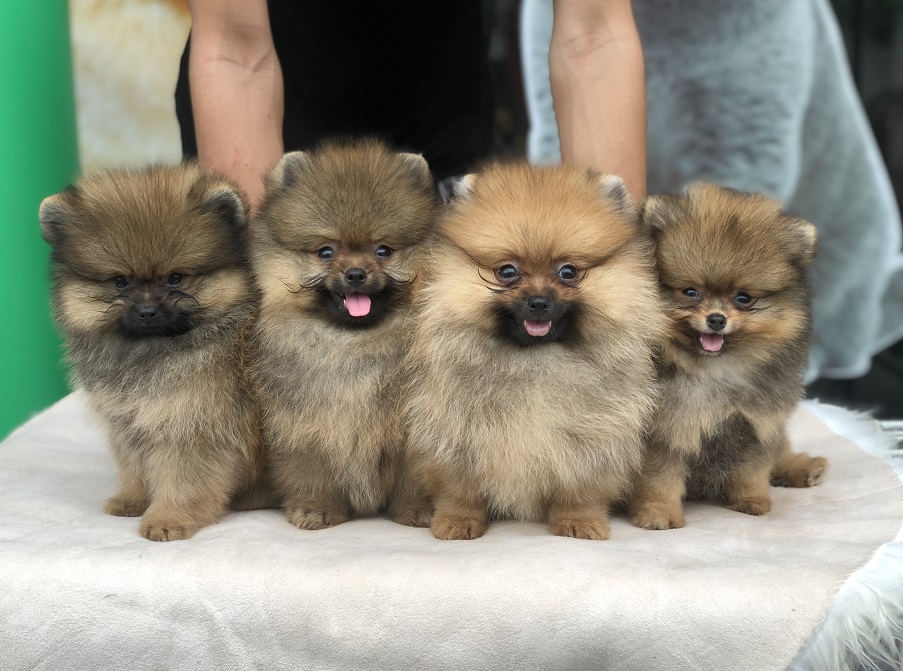
The fur around the neck and chest is longer than elsewhere on the body. The fluffy coat makes them look like adorable little walking cotton balls.
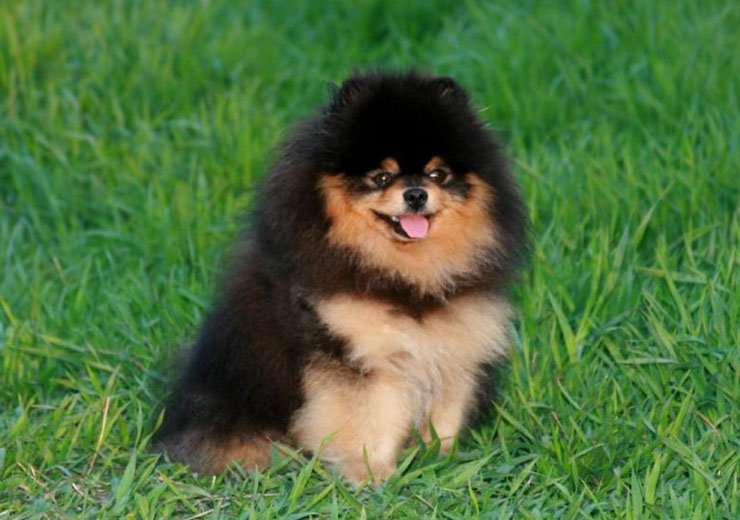
The Pomeranian’s coat colors are quite varied, with snow-white being the most common. Other popular colors include: orange, cream, brown, black, white-and-gold, white-and-blue, and sable, among others.
4.Pomeranian personality traits
A smart, active breed
Despite their tiny size, Pomeranians are an extremely intelligent breed. They’re eager to learn, which makes training fairly easy. Thanks to their sharp intelligence combined with their beautiful, adorable appearance, Poms are often top candidates for circus performances in European countries.
Pomeranians are also very loyal and surprisingly bold. They’ll readily charge at much bigger dogs if they feel threatened, and a Pom will even sacrifice itself to protect its owner from immediate danger.
Poms are extremely mischievous and energetic. Without proper training, they tend to chew and destroy things around the house. With years of experience caring for this energetic breed, BTM PET SHOP recommends taking them outside every day to run and play, letting them burn off their abundant energy.
A friendly, affectionate breed
Pomeranians are extremely attached to their owners. They’re affectionate, friendly, and get along well with other pets in the household.
This breed especially loves being cuddled and petted. That said, you shouldn’t spoil or indulge them excessively. You need to train this breed with a firm hand to prevent them from becoming disobedient and turning defiant toward you.
Pomeranians are generally quite fond of children. However, they’re not necessarily a breed suited to playing with very young children, especially infants — they can turn and attack if a child accidentally provokes them. It’s best to only let Pomeranians play with children over 5 years old.
Pomeranians also make great companions for older adults. They consistently show affection toward the people they love, and their playful, energetic personality and quick little legs constantly running around keep their owners entertained.
A breed with an excellent watchdog ability
Despite their tiny size, Pomeranians consistently rank among the best watchdog breeds. Poms are friendly with family but extremely alert around strangers. Their loud, resonant bark is enough to give pause to anyone approaching the area they’re guarding. A Pom won’t stop barking unless its owner tells it to.
You may find a Pomeranian’s barking a bit much, since they’re always sensitive and alert to unfamiliar sounds around them. You should train them to know when barking is appropriate and when it isn’t — and to stop the moment their owner tells them to.
Small Dog Syndrome
The Pom’s biggest weakness is that it’s prone to Small Dog Syndrome. This is a common syndrome among tiny dogs whose owners spoil them excessively — feeding them well and dressing them up until they develop a warped sense of their own status. They start to believe they’re the one in charge, becoming stubborn and hard to manage.
When a Pom develops this syndrome, its personality changes significantly. It’s no longer friendly and affectionate — instead becoming irritable and stubborn. Most notably, it stops obeying its owner’s commands, doing only what it wants.
To keep your Pom from developing Small Dog Syndrome, you need to train it from a young age. Teach it that you’re the one in charge and that it must obey you. At the same time, keep daily routines on a fixed schedule, rather than letting it eat and play freely whenever it wants.
Living environment for the Pomeranian
A Pomeranian can live around 15–16 years if raised in a good environment with a proper diet. So what living environment suits this breed best?
The best environment for a Pomeranian to live and thrive in is one with a yard and a cool climate. Pomeranians tolerate cold weather very well, but not hot weather.
Keep your Pom indoors, or let it play in a cool area, when it’s very hot outside. Ideally, the surrounding temperature shouldn’t exceed 30°C.

Because of their small size, Pomeranians adapt quite well to apartment living. They can move around easily and run freely.
That said, if you have the time, you should still take your Pom outside to play every day. Let it run around and burn off energy, to avoid it destroying things around the house. In hot weather, take it outside in the morning or evening, when temperatures are at their lowest.
6. How to care for a Pomeranian effectively
Diet
The Pomeranian is famously a picky eater. They don’t eat much, so you need to make sure their daily diet is packed with full nutrition.
- Protein: Meat is the best protein source for Pomeranians — lean pork, chicken, duck, etc. Remember that protein is the single most important nutrient, and you must provide it every day.
- Fat: Fat provides the energy Poms need for daily activity and play. Typically, meat already contains a sufficient amount of fat, so you don’t need to add extra fat or butter — doing so risks obesity.
- Fiber: Fiber is abundant in fruits and vegetables. Even though Pomeranians tend to hate eating vegetables, you should still make them eat some — fiber is extremely good for their digestive system. The best vegetables are carrots and pumpkin, which you can puree and mix into their meat. For leafy greens, feed your Pom plenty of bok choy, sprouts, lettuce, and similar vegetables.
- Vitamins and minerals: Seafood such as shrimp, saltwater fish, crab, clams, snails, etc. is rich in minerals like sodium, magnesium, and zinc, along with vitamins E and B. You can feed these 2–3 times a week. Don’t overdo it, since seafood can easily give a Pomeranian diarrhea.

If you don’t have time to prepare fresh food, you can feed your Pomeranian ready-made dry kibble instead. However, this should only be a backup option — fresh food is always best.
Coat care
The coat is really the measure of a Pomeranian’s beauty. With its long, fluffy fur, your Pom’s coat requires a lot of time and attention. You’ll need to brush and detangle it every day.
When caring for the coat, use a proper dog shampoo to keep your Pomeranian’s fur consistently glossy and smooth. Since a Pom’s coat grows quickly, you should trim it about every 1–2 months. Their coat also picks up dirt easily, so bathe them 1–2 times a month to remove bacteria that build up in their fur. After bathing, be sure to dry the coat thoroughly — leaving it damp can cause odor and skin fungus.
If you have the means, you can take your Pom to a pet spa, where they’ll bathe and trim its coat for a more polished look. These spa services aren’t too expensive, typically starting at 100,000–200,000 VND per visit.

Training a Pomeranian
The Pomeranian is small and adorable in appearance, but can be quite stubborn and hard to manage. For this breed, owners should start training and coaching from a young age.
Teach your Pom to use the bathroom in the right spot, to be obedient, and to come running whenever called. This reduces your workload and makes it much easier to manage once your puppy grows up.
Pomeranians don’t need nearly as much exercise as other ornamental breeds. Taking them outside to play and run around for about 25–30 minutes a day is enough. You can also add in some light exercises, such as:
- Walking with you for about 3–4km a day: this exercise helps keep a Pomeranian’s body toned.
- Jumping high: use food to encourage your Pom to jump. This exercise helps build up the muscles in its hind legs.
- Sniffing out objects: you can train your Pomeranian in this exercise to help develop its mental sharpness.
You need to be genuinely strict when it comes to training. Teach your Pom who’s in charge and whose commands it needs to follow. If it makes a mistake, patiently start the training over from the beginning. When your Pom gets something right, reward it to encourage even better behavior next time.
7. Common health issues in Pomeranians, causes, and prevention
Obesity
- Cause: This condition can result from a Pomeranian eating too much fat while getting too little exercise. Without an outlet to burn off excess energy, fat builds up and leads to obesity.
- Prevention: It’s best not to feed your Pomeranian too much fat. The amount of fat naturally present in meat is generally sufficient on its own, so you don’t need to add more. You should also make sure your Pom gets regular exercise rather than just lying around. Obesity isn’t extremely dangerous, but it’s certainly not good for your dog’s health either.
Joint and bone conditions
- Cause: This is a very common condition in Pomeranians. It can result from a congenital defect or a severe calcium deficiency that prevents normal bone development. Because of their small frame, Pomeranians are also prone to injury while playing.
- Prevention: To help prevent joint and bone issues, make sure your Pom gets enough calcium through its daily diet — especially during its most intense growth phase (roughly after 6 months of age). At the same time, avoid feeding foods that are too high in fatty acids, since this is a leading cause of bone density loss and degeneration in Pomeranians.
Cardiovascular disease
- Cause: Pomeranians have a fast, intense heartbeat. Excessive exertion forces the heart to work harder than it should, which over time can lead to heart-related issues such as heart failure or poor blood circulation.
- Prevention: Keep an eye on your Pom whenever you take it outside. If it shows signs of overexertion, hold it back and avoid letting it run itself to exhaustion. Stick to light exercises such as walking or fetching a ball to help keep it fit. It’s also worth paying attention to its daily food portions.
Other, less common conditions in Pomeranians
- Allergies: A small number of Pomeranians experience skin-related conditions, including allergies. These can result from weather sensitivity or food allergies. If your Pom shows signs of itching, take it to the vet for a checkup.
- Epilepsy: This condition is hereditary. Pomeranians with epilepsy can experience unpredictable seizures.
- Eye conditions: Eye-related issues include cataracts, dry eye, corneal dilation, and torn tear ducts, among others. Left undetected and untreated, these can lead to blindness.
- Dental issues: Pomeranians don’t have teeth as strong as some other ornamental breeds. If you have the time, cleaning their teeth daily can help prevent dental problems.
- Respiratory conditions: Pomeranians commonly develop respiratory issues such as bronchitis or pneumonia. Keep their eyes, nose, and ears clean, and keep the surrounding temperature stable — this is the best way to help your Pom avoid these conditions, especially while young.
After reading this article, BTM PET SHOP hopes you now have useful, well-rounded information about the Pomeranian breed. It’s a wonderful choice if you’re looking for an ornamental dog that’s as beautiful in personality as it is in appearance.